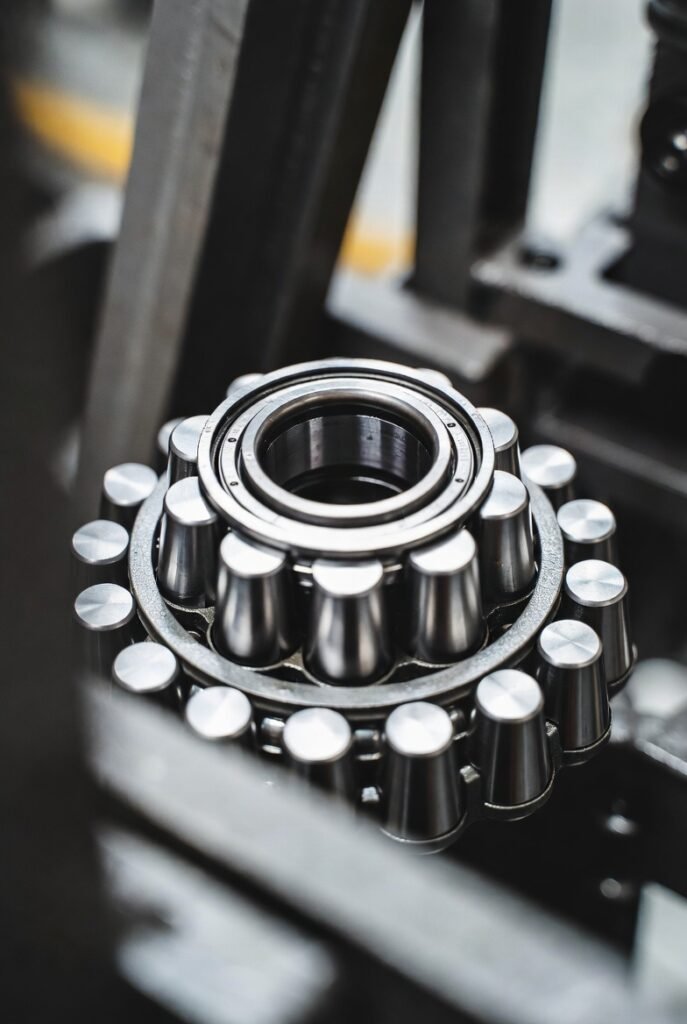
Bearings are the unsung heroes of mechanical systems, ensuring smooth motion, reducing friction, and extending equipment life. In 2024, engineers and buyers face a critical choice: ball bearings or roller bearings. While both serve the same fundamental purpose, their design differences make them suitable for distinct applications.
⚙️ Design & Structure
Ball Bearings: Use spherical balls between inner and outer rings. Their point contact minimizes friction, making them ideal for high-speed rotation.
Roller Bearings: Use cylindrical, tapered, or needle-shaped rollers. Their line contact distributes loads across a larger surface area, offering superior strength under heavy loads
Ball Bearings: Precision instruments, electric motors, automotive wheels, drones, and consumer electronics.
Roller Bearings: Industrial gearboxes, mining equipment, wind turbines, and heavy-duty transport systems.
Emerging industries like renewable energy and automation increasingly rely on roller bearings for durability, while consumer tech and EVs favor ball bearings for speed and efficiency
⚙️ Design & Structure
Ball Bearings: Use spherical balls between inner and outer rings. Their point contact minimizes friction, making them ideal for high-speed rotation.
Roller Bearings: Use cylindrical, tapered, or needle-shaped rollers. Their line contact distributes loads across a larger surface area, offering superior strength under heavy loads
🔑 Conclusion
In 2024, ball bearings remain the go-to for speed and versatility, while roller bearings dominate in strength and durability. Engineers and buyers should weigh load, speed, environment, and maintenance before making a choice. The right bearing not only improves performance but also reduces downtime and long-term costs.