In the world of agriculture, machinery isn’t just a convenience—it’s the backbone of the operation. From tractors and combines to planters and harvesters, every minute of downtime during a critical season can translate into significant financial loss. At the heart of this heavy, dust-filled, and often muddy work are bearings, components tasked with a near-impossible job: providing smooth, reliable motion in one of the most punishing environments imaginable.
Choosing the wrong bearing for agricultural equipment is a shortcut to premature failure. This guide cuts through the noise to explain which bearings stand up best to harsh farm conditions and how to select them for maximum durability and minimum downtime.
Why Agriculture Eats Standard Bearings for Breakfast
Agricultural applications present a perfect storm of challenges:
Extreme Contamination: Dust, soil, crop debris, and chaff are abrasive and relentless.
Moisture & Corrosion: Morning dew, rain, mud, and chemical sprays lead to rust and wash away lubricants.
Shock & Heavy Loads: Equipment handles uneven terrain, heavy implements, and variable crop loads.
Misalignment: Working on uneven ground can stress components beyond ideal alignment.
Infrequent Maintenance: During busy seasons, regular greasing can be overlooked.
A bearing that thrives here must be built differently.
Champion Bearing Types for Farm Machinery
1. Sealed & Shielded Deep Groove Ball Bearings
The workhorse for many rotating shafts on farm equipment.
Why They Excel: Modern triple-lip contact seals (often denoted as 2RS1 or TT seals) are critical. They lock lubricant in and keep dirt and moisture out far more effectively than standard metal shields or single-lip seals.
Best For: Motor shafts, pulley idlers, fan shafts, and lighter-duty applications where high precision and moderate load capacity are needed.
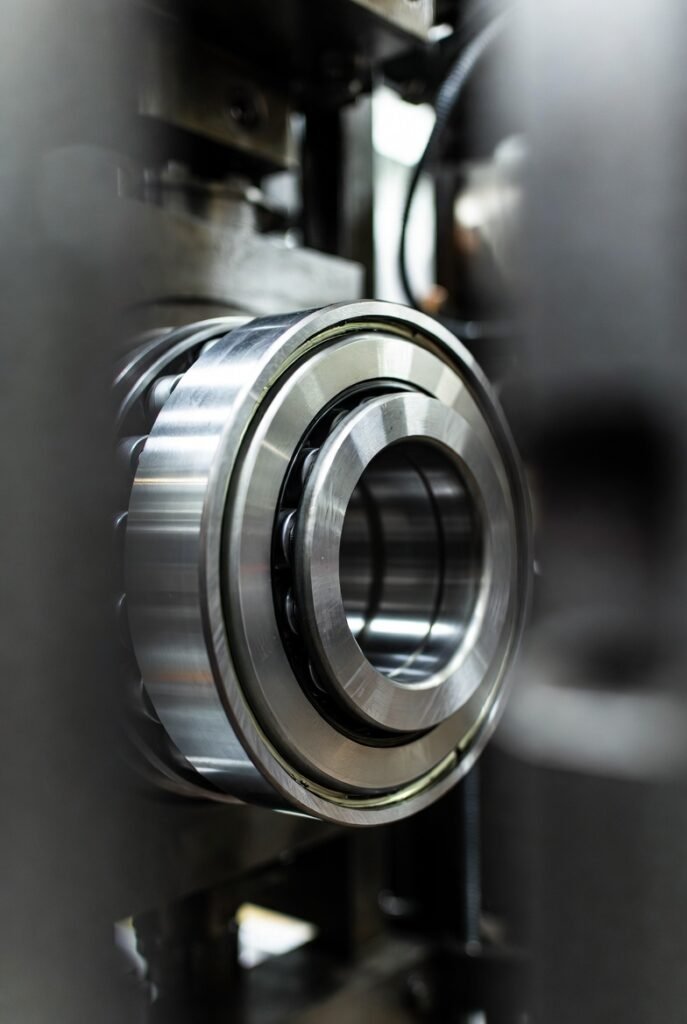
2. Spherical Roller Bearings
The undisputed champion for heavy, misaligned loads.
Why They Excel: Their internal self-alignment capability compensates for shaft deflection and housing misalignment caused by rough terrain. They carry very heavy radial loads and moderate axial loads. Look for sealed spherical roller bearings (e.g., SKF’s Cooper Split style or other sealed units) which are pre-greased and sealed for life, eliminating a major maintenance point.
Best For:Tractor final drives, axle systems, header shafts on combines, and roller mainframes—anywhere heavy loads and shaft flex are present.
3. Tapered Roller Bearings
Essential for managing combined radial and thrust loads.
Why They Excel: They are uniquely adjustable, allowing mechanics to set precise preload for optimal performance and longevity. Their design makes them incredibly robust. In ag applications, they are often used in sealed cartridge units (e.g., Timken’s Timken® SealTrak®) that integrate the bearing, seal, and housing.
Best For:Wheel hubs (especially on high-horsepower tractors and grain carts), gearboxes, PTO shafts, and pinion shafts.
4. Polyamide Cage & Specialty Bearings
Engineered solutions for specific problems.
Why They Excel: Bearings with glass-fiber reinforced polyamide cages are lighter, resist corrosion, and cope better with poor lubrication than traditional steel cages. Stainless steel bearings (440C grade) are invaluable in areas exposed to frequent fertilizer or chemical washdown.
Best For: Manure spreaders, chemical sprayer pumps, and equipment in constant contact with corrosive agents.
The “Durability Trifecta”: What to Specify
When selecting an agricultural bearing, don’t just pick a type. Insist on these three features:
Superior Sealing Technology: This is non-negotiable. Look for:
Multi-Lip Contact Seals: Provide the best exclusion.
Labyrinth or V-Ring Seals: Often used in conjunction with lip seals on wheel hubs for added defense.
Integrated Seal Cartridges: The most robust, maintenance-free option.
Corrosion-Resistant Surfaces & Materials:
Surface Treatments: Specify bearings with phosphate coating or Black Oxide finishes. These provide a protective layer that holds lubricant better and resists initial rust during storage or first use.
Stainless Steel: Where corrosion is the primary enemy.
High-Quality, High-Temperature Grease:
The bearing is only as good as its lubricant. Factory-filled grease must be suited for a wide temperature range (-30°C to +130°C) and resist washout. Look for grease with molybdenum disulfide (Moly) for added protection in high-load, slow-rotation scenarios.